
Integrity
Easter Vigil 2026

Mt 18:1-10
St. Vincent de Paul Church
April 4, 2026
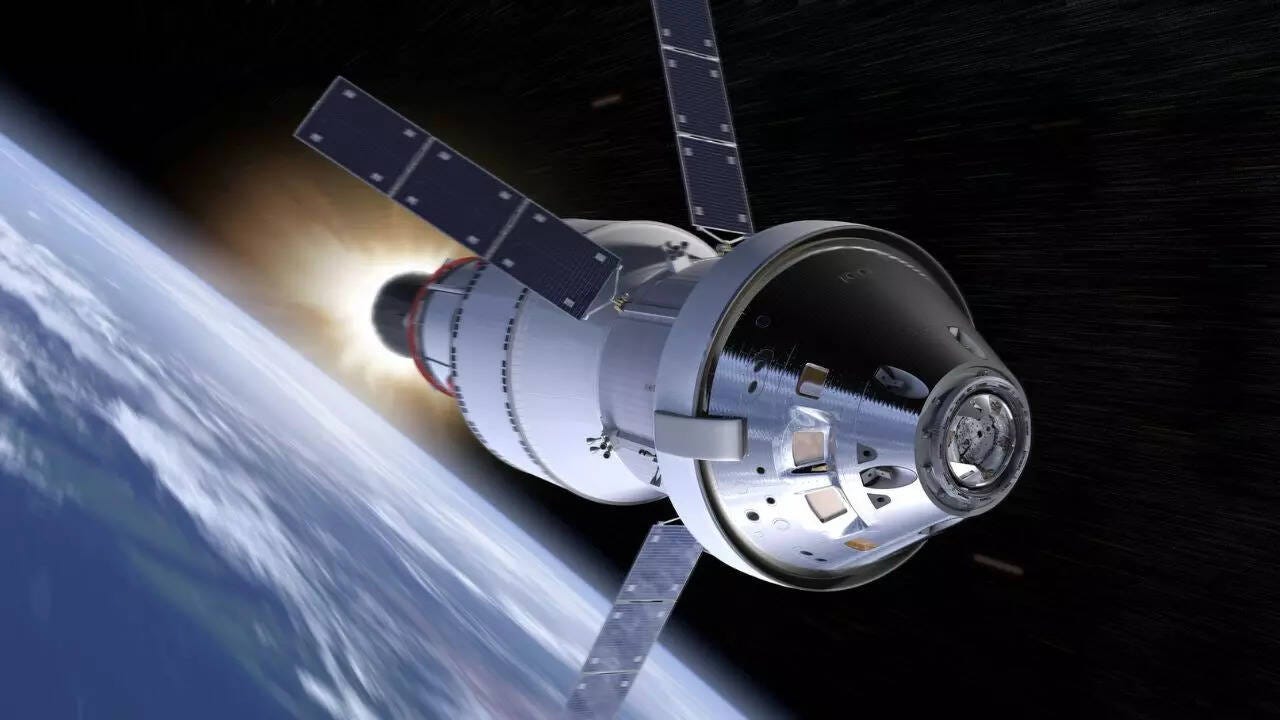
On July 20, 1969, the astronauts of Apollo 11 mission, Neil Armstrong, Michael Collins, and Buzz Aldrin accomplished the first moon landing. On April 1, 2026, “Launch Day,” NASA successfully launched four astronauts into space aboard the Artemis II moon exploration mission. As successor to the Apollo mission, the Artemis space program is the first crewed mission to orbit the moon in over fifty years and will travel farther from earth than humans have ever gone before.
With Artemis II, not only will human beings go farther into space than ever before, but the crew itself breaks boundaries: There is Commander Reid Wiseman, a Baltimore native; Victor Glover, pilot of the Orion spacecraft and the first African-American to travel to the moon’s vicinity; Christina Koch, the first woman to do the same; and Jeremy Hansen of the Canadian space program who is the first non-US citizen to accomplish the amazing feat. Together they are Artemis II.
They called their preparation the three T’s: Talking, Testing, Training. Artemis II is a 10-day moonshot mission where astronauts will orbit the moon to test deep space systems and prepare the way for future moon landings. It is what NASA calls a “test mission” for Artemis III planned for 2028.
Everything in the Bible, the Law and the prophets, leading up to these holy days have been test missions—God talking, testing, training—preparing the People of God for the revelation of God’s top secret plan of redemption and salvation for the human race. Here is the God of the universe, the one who was there “In the beginning, when God created the heavens and the earth” (Gen 1:1), who entered into our orbit, who has become part of planet earth.
Palm Sunday launched the journey to the Cross commanded by Jesus, our intrepid Teacher and Master, and crewed by the Twelve Apostles, the original “Apollo” mission, “Apostle 12.” The Apostles know their mission is dangerous, unpredictable, uncertain. Some will abandon ship. Will their mission succeed or fail?
The science behind a rocket launch is called thrust, the forward and upward force to lift off the ground. Thrust is generated by the propulsion of the rocket through the application of Newton’s Third Law of Motion which states for every action there is an equal and opposite reaction. Rockets create thrust by combusting fuel and expelling exhaust to generate enough upward force to overcome the weight of gravity. Weighed down and turned inward by the force of Sin, Jesus came to show us the way to the Father and to get us there.
The cross is God’s rocket. Upon the cross, Jesus combusts the Sin of the world. Evil exhausts its fuel upon him generating spiritual thrust: Resurrection. Christ is Risen, Alleluia, Alleluia!
Resurrection, spiritual thrust, means that Jesus has overcome every oppressive force of sin through the application of God’s first and second law, the Greatest Commandment, “You shall love the Lord, your God, with all your heart and your neighbor as yourself” (cf. Mt 22:34-40). Jesus loves the God the Father, you and me, and the whole human race so much that the law of death itself is overcome. “We know that Christ, raised from the dead, dies no more; death no longer has power over him” (Rom 6:9). Mission accomplished.
Each astronaut crew gets to name the spacecraft for their mission. The Artemis II crew members named the Orion spacecraft “Integrity.” According to NASA, “The name Integrity embodies the foundation of trust, respect, candor, and humility across the crew and the many engineers, technicians, scientists, planners, and dreamers required for mission success. The name is also a nod to the extensive integrated effort – from the more than 300,000 spacecraft components to the thousands of people across the world – that must come together to venture to the Moon and back, inspire the world.”[1] In theological language, we call this synodality: communion, participation, and mission.
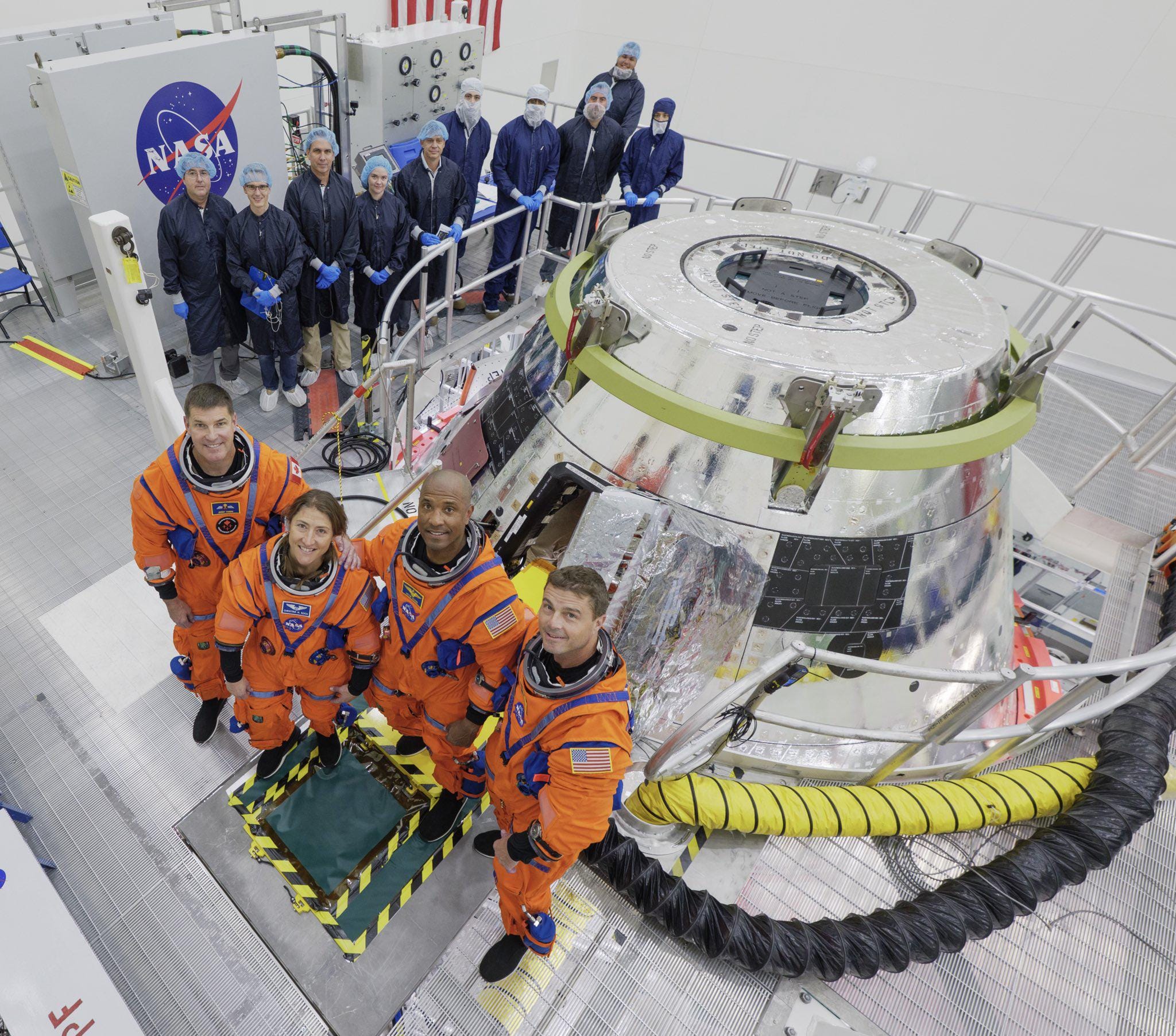
Commander Reid Wiseman explained, “We have a saying in the crew that you can either be ‘in integrity’ or ‘out of integrity.’ We use it all the time. If you show up to class prepared and early and ready to go you’re ‘in integrity.’ If you show up five minutes late because you had to go grab a coffee or you didn’t plan properly you’re ‘out of integrity.’ We give each other a lot of grace. You’re not always perfect and you’re not always wrong.’
Dear candidates and catechumens, our spiritual astronaut candidate class of 2026: You have completed your own three “T’s,” talking, testing, and training in the catholic faith and mission. Welcome aboard!
Many hands and hearts and voices have touched your lives to get to this day. It is your new Christian responsibility to live your faith ‘in integrity’ in word, sacrament, and service. The mission of Jesus Christ and the holy catholic Church, the mission to heaven, is every bit if not more important than the mission to the Moon or Mars.
Speaking of launch day…
On Saturday May 9, we will launch a mission called the Parish Passport Project, sponsored by our Parish Transition Team, a time of talking, testing, and training to explore our spiritual terrain. Our new mission as a new and expanded parish requires we generate spiritual thrust, looking forward and upward together, not backward and inward.
If the “Apostles” are Apollo, we are Artemis. We are the successors of a great mission, a great journey from the cross to the glory of the Resurrection. Lift off!
[1] Rachel H. Craft, “Artemis II Crew Members Name Their Orion Spacecraft,” September 24, 2025. https://www.nasa.gov/blogs/missions/2025/09/24/artemis-ii-crew-members-name-their-orion-spacecraft/
Wonderful as always, Fr. Ponton!